

Verdict

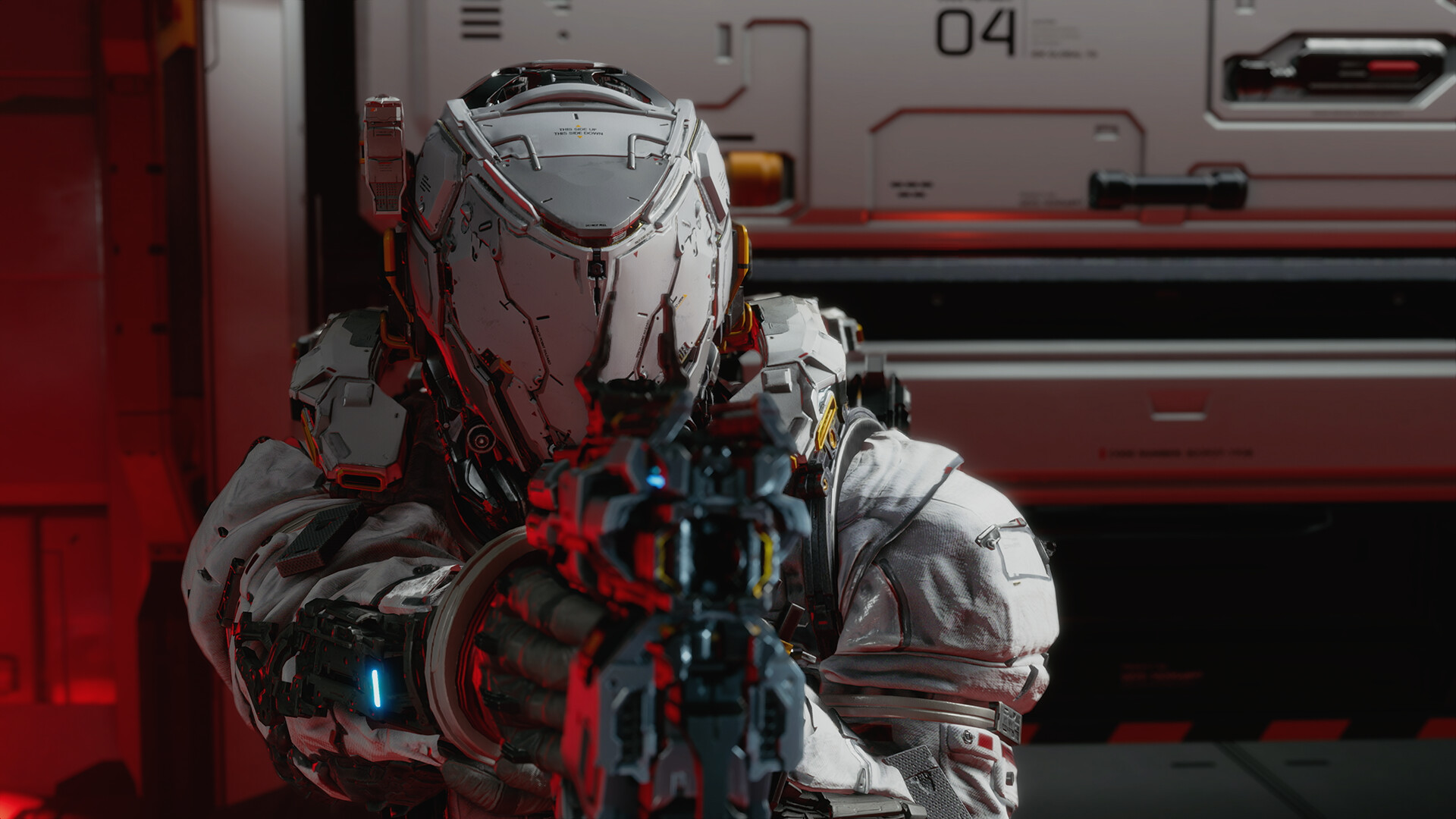
Pragmata is a truly unique and wonderful third-person shooter. It’s a throwback to linear action games of old, and thankfully its undercooked story isn’t enough to diminish the quality of the brilliant hacking focused action.
My first impression of Pragmata, before I played it, wasn’t great. Hugh, the astronaut protagonist, seemed dull; his android sidekick, Diana, came across as intensely annoying, and I didn’t understand why its linear action stood out from the crowd. Now, a preview session and a full playthrough later, my opinion of Capcom’s latest new series has completely flipped, albeit while validating some of my initial concerns.
Pragmata is a third-person shooter that sends me back to the action games PS3 and Xbox 360 era. It’s mostly linear, about 12 hours long, and focuses heavily on gameplay over story, and those aspects are why it boasts many of the same strengths and weaknesses.

The undeniable highlight of Pragmata is the gameplay. Hugh is your standard shooter protagonist – zero personality and lots of guns. You don’t see his face much, but he’s clearly a generic white dude with short back and sides and a facial scar of two. Shortly after the disaster on the moon, he’s joined by Diana, a little girl android who calls the space station home. The two of them join forces to find Hugh’s friends and get back to earth safely.
Since Hugh’s earth-produced weapons don’t pierce the shells of the moon-based robots, he needs Diana’s help to hack the enemies to open up their weak spots. How that plays out in combat is simple but ingenious. While you shoot as Hugh just as you would in any third-person shooter, you need to solve a hacking puzzle in real time to make the robots vulnerable. As Diana, you need to navigate a grid to a particular tile to complete the hack, passing through nodes that increase damage, while simultaneously dodging incoming fire.
You’re essentially controlling both Hugh and Diana at the same time, and the multi-tasking gameplay works phenomenally well. It’s the perfect level of simple and intense. Your eyes dart from side to side, making sure you’re positioned perfectly, all while your hands race to complete the hacking puzzle. Neither element of the combat overwhelms the other, and both feel great without getting old.
It helps that Pragmata keeps introducing new elements to Diana’s hacking. Ultimate abilities, special nodes that confuse, burn, or even turn enemies against their own, and brutal finishers are all added throughout the 12-hour story. That keeps increasing the complexity, ensuring you’re not coasting your way through later encounters.

There’s variety in the basic shooting, too. Hugh starts with just a basic pistol, complete with a measly six-round magazine. It’s slow, takes ages to reload, and doesn’t pack much of a punch. However, he quickly gets access to a more powerful arsenal, complete with rocket launchers, shotguns, and even a gun that fires a decoy version of himself to distract enemies.
You’ll find that you use pretty much every weapon regularly, only avoiding the entirely useless ones – I’m looking at you, the laser cannon. Ammo is very limited, requiring you to pick up new copies of each gun, and they all reload slowly, which prompts you to keep switching weapons in combat. In boss fights, you’ll often find that you’ve used all of your weapons, not only as different tactical options, but out of pure necessity. It adds another element of chaos to the action, elevating the combat, as you fight with what you have available and try to position yourself to make the best of it. You can’t take on enemies with your shotgun in the same way you would the rocket launcher, of course.
Every fight gives you the chance to earn upgrade materials, which are spent on improving your weapons, suit, or hacking abilities back at The Shelter – Pragmata’s hub world. The currencies you need come thick and fast, so you’re unlocking useful upgrades regularly, giving you a real feeling of progression. That only adds to Pragmata’s sense of pace. The action is fast, intense, and stressful from start to finish, and I can’t get enough of it.
The action culminates in the game’s handful of boss fights, all of which are phenomenal. They’re not just longer, familiar fights, but each one throws new tactical options at you and attacks to understand. The arena and boss design elevate the fights, too, none more so than a battle against a massive scorpion robot about halfway through the game.
When you’re not fighting 3D printed enemies, Pragmata is far less interesting. Hugh is a protagonist dragged from the games of the early 2000s, and Diana is well… annoying. The game really struggles to nail the heart-warming fuzziness that it aims to, only achieving that in the game’s final scene.
Until then, the story feels cold, and any connection is completely unearned. Diana bounds around with youthful enthusiasm, munching on data drives and marvelling over how cool trees and sandpits are. She starts to grate within moments, her voice never truly sounding like a real little girl. Hugh is less annoying, but far more forgettable. He shows little emotion at any time, his “good job kiddo” coming across as almost sarcastic, missing sincerity by such a distance. He’s as much a machine as the ones he’s destroying, showing no personality or growth at any point.

The story’s pacing doesn’t help either. Hugh and Diana are brought together within minutes, and are best buds from the get-go. The father-daughter dynamic is pushed, but it is forced so hard immediately that it never feels believable. Nothing is ever bad enough to the point of distraction; the story just never matters.
An emotional, impactful story would have been great to have, but there’s more than enough quality in Pragmata’s combat to make it enough of a reason to play on its own. Ignore Diana’s annoying voice and focus on what Pragmata is: a truly unique and wonderful third-person shooter. It’s a throwback in that way, providing such a unique gameplay premise that it’s hard to put down.
PragmataPragmata#Pragmata #review #nostalgic #aesthetics #Stier #combat1776450438
