

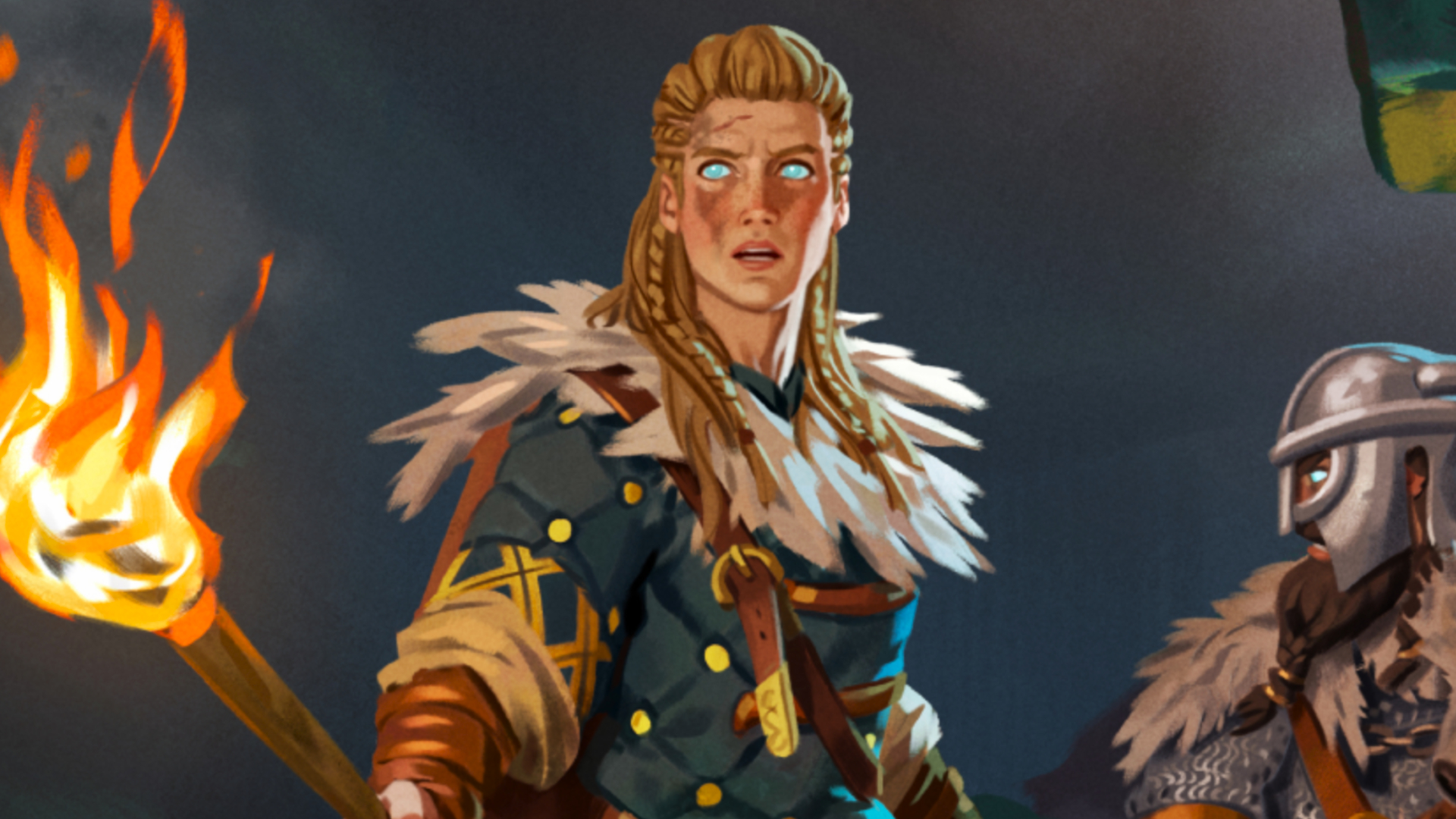
Valheim is, perhaps, one of the greatest indie success stories ever. It’s a simple concept: a Norse-inspired survival game where you build a house and fight monsters. Set to release in 1.0 this year – five years on from its initial debut – Valheim is in many ways akin to Rust and other genre stalwarts, but there’s something about it that just keeps bringing people back. That phenomenon bears examination – so we’ve teamed up with Thames & Hudson and Read-Only Memory to show off the Valheim chapter from Nathan P. Gibson’s latest book, Indie Game Works. Turns out that veering away from being an MMO is “the best design decision” that the team ever made.
Indie Game Works explores the world of indie game development, providing deep dives into the creation of iconic titles like Abzu, We Happy Few, Sable, Dredge, and, of course, Valheim. With interviews from various studios, it’s described as “a love letter to the people and passions behind the code” and a “journey through the beating heart of indie game culture.”
Available via Thames & Hudson, with a limited-edition special copy available via Read-Only Memory, I’m excited to show off the Valheim chapter in full, with three pages of unique concept art, too. If it piques your interest or if, like me, you really want to read the Dredge and We Happy Few chapters, we’ve got some links to Thames & Hudson’s and ROM’s respective stores below. But, for now, enjoy the Valheim chapter.

Valheim began life as a test project rather than a dedicated videogame release. Richard Svensson, CEO and co-founder of Skövde-based Iron Gate Studio, explains that he originally developed the basic gameplay to experiment with networking solutions for multiplayer. However, those people involved in testing seemed to find the prototype enjoyable, according to Svensson: “Eventually it was pretty fun to run around with multiple players, and it needed some kind of theme.”
The focus on multiplayer meant that early versions of Valheim were often large-scale ideas with many players. Eventually the team moved away from the MMO concept to focus on single-player experiences or with small groups working together. “Downscaling the game like this and narrowing the scope of it is probably the best design decision I’ve ever made for Valheim,” says Svensson.

Svensson himself is not exactly a huge fan of Vikings, but felt the Nordic theme worked well with the gameplay. It also had the added benefit of giving Valheim a distinctive setting that could be easily adapted, compared to similar games taking place in fantasy worlds. Meanwhile, the art style of Valheim arose out of necessity, with Svensson’s lack of experience meaning he needed to utilize a style that he could easily implement himself.
“As for the art style, it started out as a purely practical reason as the original plan was for me to make the game on my own,” explains Svensson. “I have some instincts for graphics – of what looks good and what doesn’t – but I’m not the most gifted 3D artist. Because of that, it had to be an art style that I could easily produce by myself and that didn’t take too much time. Luckily for us it turned out that this art style wasn’t only quick to produce, but also pretty unique.”
As far as how the production process behind Valheim works, the studio creates each biome separately and sequentially. This wasn’t the case during the first few years of development but has evolved as an efficient method to keep everyone on track. “We have the blueprint for the way a biome works, which means that we know roughly what we’ll need for each one of them: a boss, key items, more difficult enemies and better gear for the players,” says Svensson. “We then try to make the new content fit the theme of the biome we’re working with, and we do our best to also create some kind of unique gameplay for each biome.”

Games such as The Legend of Zelda: Breath of the Wild (2017) and The Elder Scrolls V: Skyrim (2011) were significant influences on the look and style of Valheim, as was Norse mythology. However, the team was careful not to get bogged down by staying too faithful to the game’s Norse roots. “Eikthyr, for example, exists in Norse mythology, but he’s not a lightning monster deer,” says Svensson. “Everyone in the team has participated with their own suggestions, and the mythology is a loose framework rather than something we follow to the letter.”
Available through early access, Valheim has already proved both a financial and a critical hit, allowing Iron Gate Studio to focus fully on its development as the game approaches a full release. That is what Svensson himself is most proud of, saying: “We have been able to build up a whole company around this game, a company that people still seem to like pretty well.”

Imagine a world where Valheim had, indeed, been an MMO. Or, one where it was a battle royale – yes, I was shocked by that one as well.
Valheim 1.0 is slated to drop this year, but the exact release date isn’t currently known. You can try it out on Steam (it’s currently 50% off) if you haven’t already.
Indie Game Works is out now as a limited edition from Read-Only Memory, alongside a general release edition from Thames & Hudson. The limited edition version includes a unique handmade slipcase and foil typography details, all wrapped up in a cut flush hardback binding. It’s absolutely gorgeous, and is the perfect addition to any collection.
Valheim,Iron Gate,Coffee Stain PublishingValheim,Iron Gate,Coffee Stain Publishing,Survival#Moving #Valheim #MMO #quotthe #decisionquot #team1777122176
