

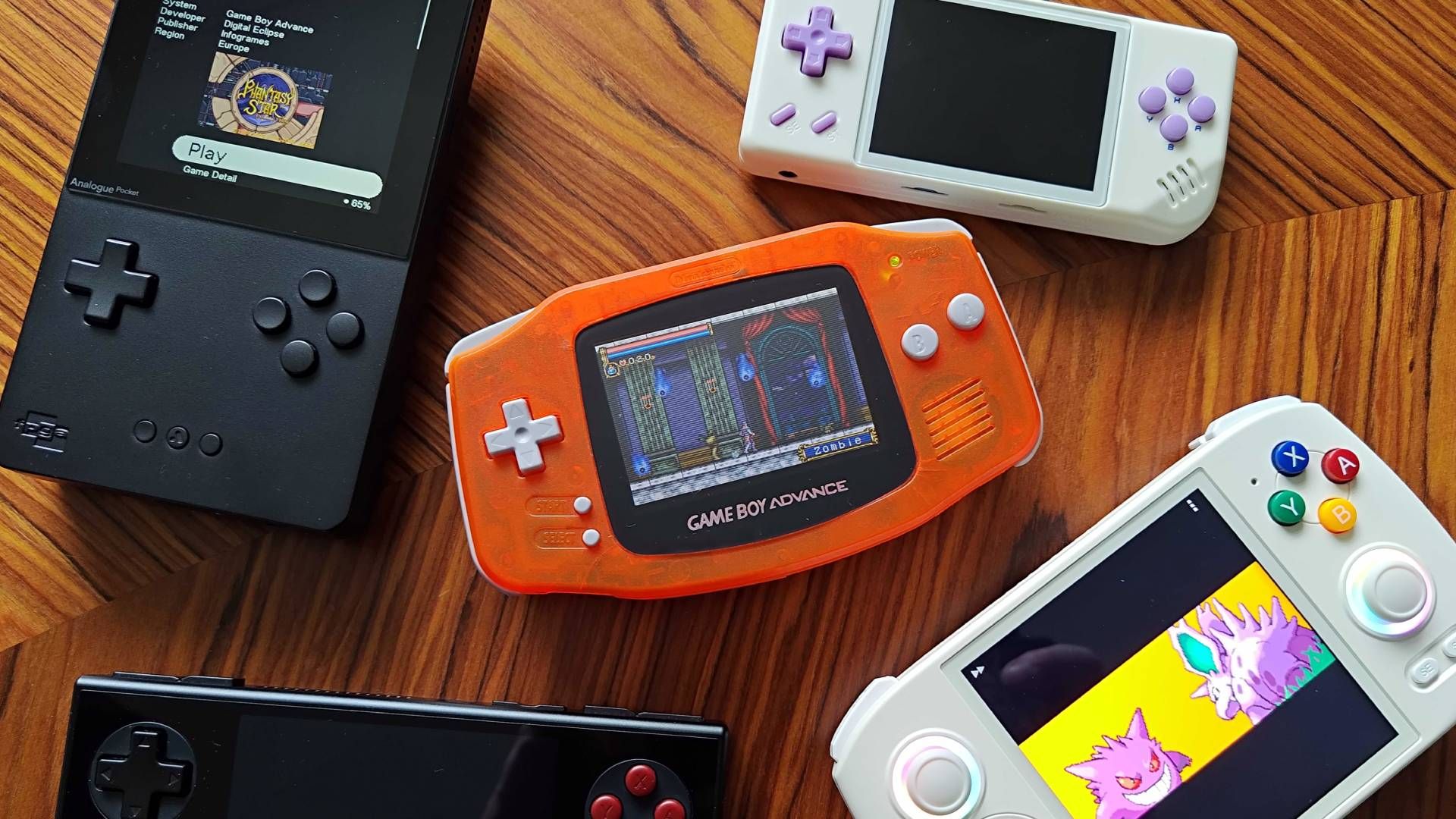
Yes, I know it feels like the GBA arrived just yesterday for some of you, but Nintendo’s legendary retro handheld is celebrating its 25th anniversary in the US. The way we play our silly little video games on the go has changed dramatically since 2001, and yet, plenty of you are still looking for ways to dive into the portable’s library of 32-bit classic capers.
Luckily, there’s no shortage of ways to play the best Game Boy Advance games in 2026, and it’s safe to say I know a thing or two about accessing the handheld’s back catalogue. Not so long ago, the only reliable way to play Ninty’s 2000s hits was to acquire an actual GBA or DS by taking advantage of its backwards compatibility. These days, though, the number of ways to revisit some of the system’s revolutionary pocket adventures is frankly overwhelming, and there’s something to suit virtually all budgets.
As the GBA turns 25, my focus is on helping all of you handheld fans find the right way to play. For some of you, using upcoming Prime Day gaming deals to grab a cheap and cheerful emulation device will do the trick, whereas some may want to dive into a portable rabbit hole and embrace authentic FPGA hardware remakes and clever mods that revamp the OG hardware. I’ve got you covered regardless, as I’ve been exploring new ways to play the Game Boy Advance for decades.
Budget GBA handhelds
I’m not exaggerating when I say there are a hundred handhelds out there that can run GBA games. That’s thanks to the efforts of emulation devs who’ve completely sussed out the ins and outs of the OG Game Boy Advance over decades, and the fact that replicating the portable’s hardware takes very little processing power.
That said, when it comes to picking out a budget GBA-style portable, not all options are equal. You’ll come across plenty of unbranded, cheap consoles at marketplaces that can technically run your backed-up cartridges, but will do so with stuttering, frame drops, and audio inaccuracies. The good news is that those caveats aren’t exclusively tied to price, and I’ve tested plenty of portables that provide a solid experience while looking and feeling the part.
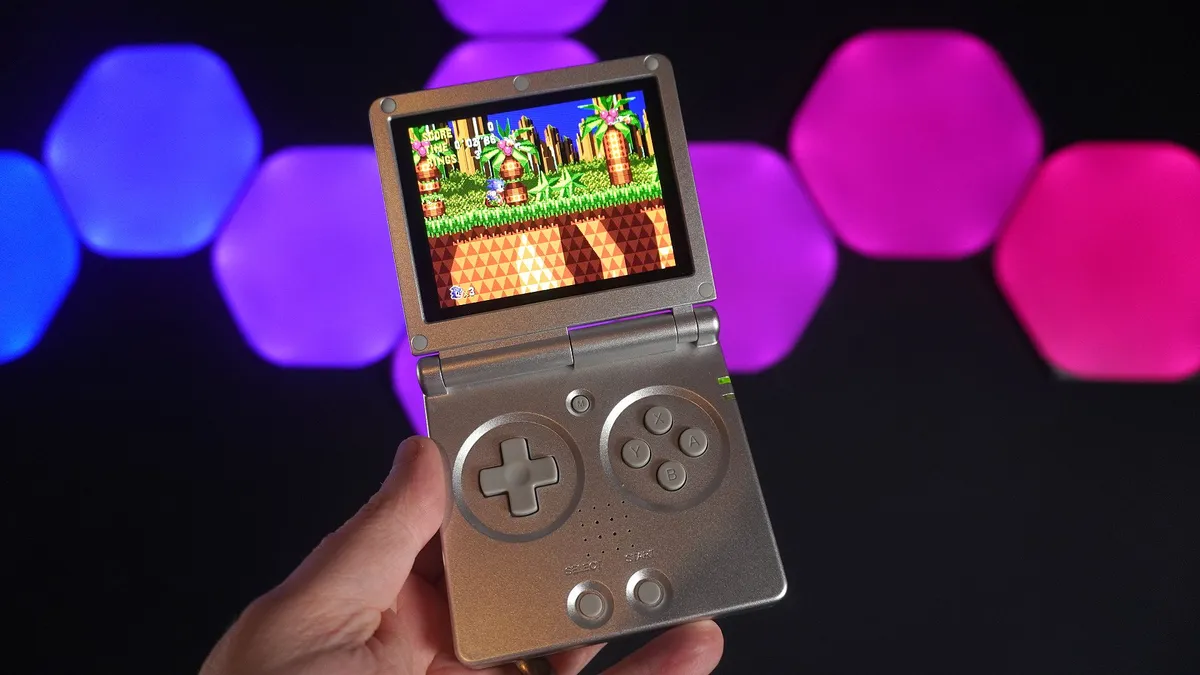
The very first brand you should consider when looking for GBA consoles is Anbernic. It’s been in the handheld game since the late 2010s, and while some of its early portables were designed with light 8-bit gaming in mind, its arsenal of modern options, like the RG34XX and GBA SP-inspired RG35XXSP clamshell, will easily run the handheld’s classics at full speed. Naturally, the portable console maker has also nailed mimicking Nintendo’s original designs, so you’re getting something that almost looks and feels like the real McCoy.
Lean into Linux

More often than not, you’ll find that budget handhelds run a custom version of Linux with emulators for the likes of the GBA pre-installed. These lighterweight bespoke operating systems are better suited to low-spec chips than Android, but it does mean you won’t have access to the Play Store or the same device settings as your smartphone.
Anbernic even has an homage to the Game Boy Micro, and the RG28XX happens to be one of my favorite budget handhelds. It’s not a 1:1 copy of the Game Boy Micro, as it instead sprinkles in some visual references to the DMG Game Boy onto an incredibly small horizontal shell. Typically speaking, you’ll find it for under $40 during sales like Prime Day, and that’s a steal considering it can emulate everything up to the PS1.
Naturally, Anbernic isn’t the only brand worth considering during your hunt for a budget GBA handheld. Miyoo also contributes to the affordable battlefield with contenders like the Mini Plus, providing a classic vertical Game Boy layout, and the Flip V2 (around $80 at Amazon), paying tribute to the GBA SP. Powkiddy also has a portable with the same latter objective for $60, so you shouldn’t have any issues grabbing something for under $100.
Mod(ernize) your real GBA

You don’t have to be a purist to want a real, Bona fide Game Boy Advance. I’m a big advocate for preserving hardware, and I’ll encourage anyone to use OG tech regardless of whether there are better ways to play. It’s sometimes tricky to get people on side, though, as the first GBA hasn’t even got a backlit screen, and even most SP models opted for a subpart front-lit display at the time (with the exception of the now rare backlit AGS 101 model.)
The good news is that you can remedy Nintendo’s original GBA hardware with some clever mods. I know many of you won’t be comfortable tinkering, especially in instances where a bit of soldering is involved, but it is possible to add shiny new IPS screens to the old handheld that completely transform its visuals. The version I’ve used goes for around $25 at Aliexpress, but there are also options that come with shells that’ll save you from trimming any plastic or trying to precariously sandwich things together.
If you’re comfortable modding a real GBA, you can actually add all the same features as a modern emulation-based handheld. Not only can you replace the need for AA cells with a USB-C rechargeable battery (around $20 at Aliexpress), but you can even add HDMI for some big-screen play. If all of that sounds like too much, you could even just freshen up the portable’s abilities with a flash cart (typically under $20), which will at least save you from bringing multiple games with you on the go.
Premium GBA goodness

Technically, the sky is the limit in terms of premium ways to play GBA games. That’s simple due to the fact that you could buy one of the best gaming handhelds that can handle Cyberpunk 2077 and use it to play Mario Kart: Super Circuit. I’m not going to stop you from doing that, and I’d actually encourage it if you’ve already got a punchy portable to hand, but there are specific devices out there that are designed with the Game Boy Advance in mind if you have cash to splash and an accuracy itch to scratch.
The main decision you’ll have to make is whether you want something that primarily functions like a GBA on a hardware level using an FPGA, or a device that blends high-spec software emulation with ultra-premium materials. If you’ve got the former on your mind, you’ll want to focus on getting hold of an Analogue Pocket, as it’s a portable that will run all your actual GBA cartridges with 100% accuracy while boasting a vibrant 3.5-inch LCD display, a beefy 4300mAh rechargeable lithium-ion battery, lush controls, and the ability to run plenty of other handheld games using adapters or custom FPGA cores.

I have no qualms with saying the Analogue Pocket is the ultimate Game Boy, and it could honestly replace most of my consoles and handhelds. At the same time, it costs a pretty penny, as the basic black and white versions are available for $239.99. That’s before you factor in adapters for those aforementioned other handhelds like the Game Gear and Atari Lynx, or the HDMI dock that’s been continually out of stock for a while now. Still, it’s important to look at what you’re actually getting for your money, and truth be told, investing in a Pocket will save you from thinking about ways to play GBA games ever again.
If you’d rather still have access to all the perks of software emulation, including access to more than just GBA games, there are specific options beyond just using your Steam Deck OLED or ROG Xbox Ally X (even if those are valid options). One of the first devices I’d consider is the Anbernic RG Cube, as while its square screen is perhaps better suited to Game Boy and GB Color romps, its horizontal design means it feel embraces the spirit of the OG console.
If you’d prefer something that feels a bit more like a successor to the GBA, I’d step things up to the Ayaneo Pocket Micro. As the name suggests, it’s a tribute to the Game Boy Micro that uses the same elongated horizontal layout while scaling the screen up to 3.5 inches, adding active cooling to help its Helio G99 SoC pack more of a punch when emulating more demanding consoles, and other modern perks like hall-effect thumbsticks.

The Pocket Micro also boasts a CNC aluminium frame, something that helps the handheld feel more premium than most options out there. That is perhaps to be expected since the Android device comes in at $249.99 for the version with 8GB RAM and 256GB storage, which places it as an emulation alternative to the FPGA Analogue Pocket. Everything comes down to wanting to run real carts with 100% accuracy, or preferring the flexibility provided by Android-based gaming handhelds that can do far more than run Metroid Fusion or your old Pokémon games.
By this stage, you should have an idea of what you want from a modern GBA. Whether that means searching for the real thing at eBay, picking up an affordable clone, or splashing out on a high-end handheld is your call. The end result should be spending the Game Boy Advance’s 25th birthday playing its greatest outings, which could make for a refreshing break from the horrors of modern hardware prices and AI nonsense.
Sticking with Valve’s handheld? Swing by the best Steam Deck docks and best Steam Deck accessories to enhance your hybrid setup.
Retro,Hardware#years #today #GBA #arrived #don039t #real #play #handheld039s #hits1781188222
