

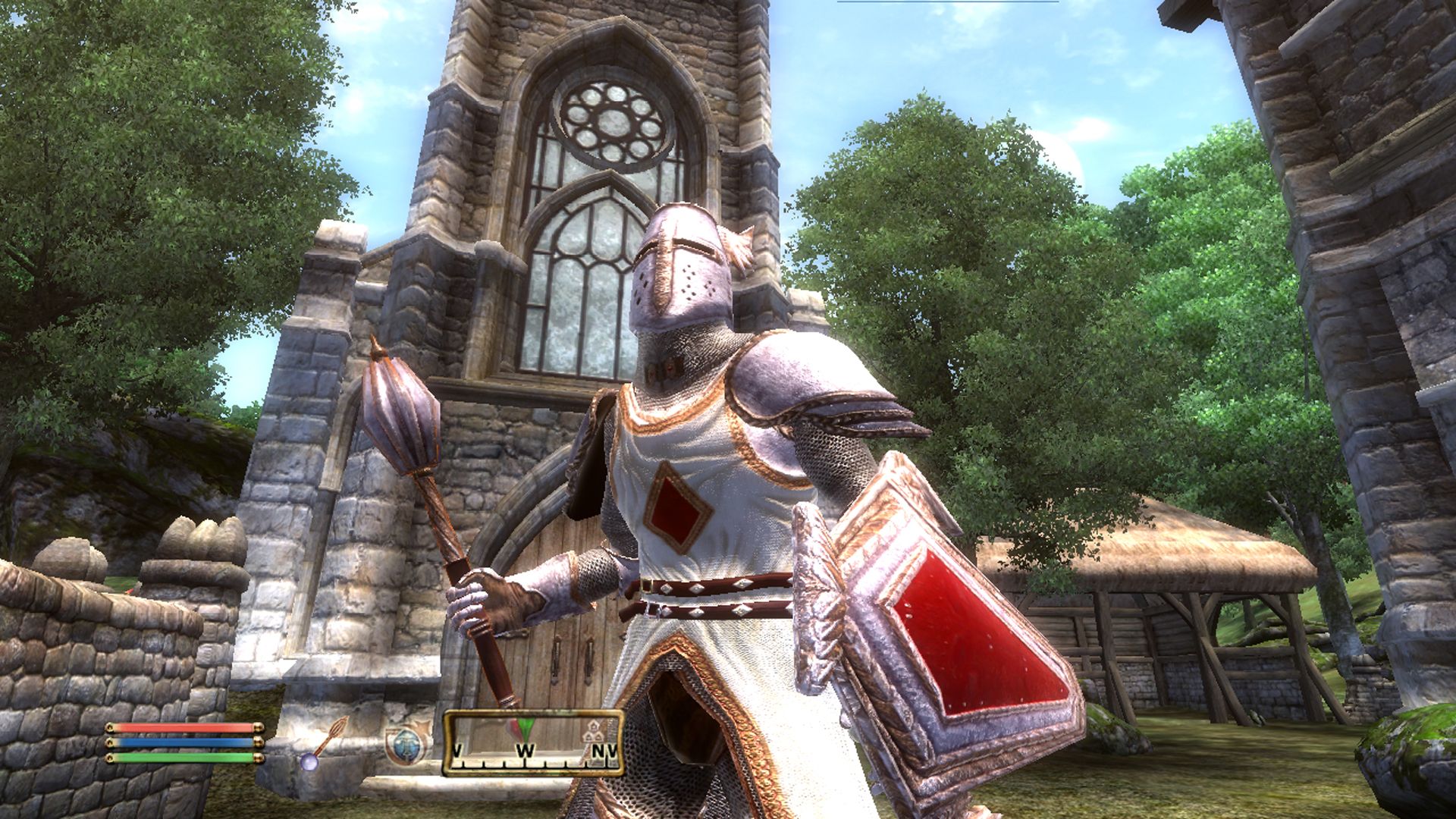
While Skyrim might be the meme in Bethesda’s catalog due to how often it’s been ported, to me, Oblivion is the bigger landmark. It brought The Elder Scrolls to consoles and modernized a lot of the mechanics and design principles behind the series. A dev at the studio agrees, pointing to your quest against the Mystic Dawn as a pillar of what the team does creatively.
Now a lead creative producer at Bethesda, Tim Lamb was a QA lead on Oblivion, and he remembers how the game felt revolutionary in development. “When we were developing that it felt like it had never been done before. It was like we were breaking all the rules, and we were doing something special, and impossible,” he tells GamesRadar+.
Watch On
“As we moved from Oblivion to Fallout 3 to Skyrim to Fallout 4,” Lamb says, “it’s like the next game was, ‘What was the better version of [Oblivion]? What were the improvements? What were our desires?’ And then ‘Okay, now you do that.'”
Given the reception to Oblivion – glowing critically with huge sales across all platforms – it’s safe to say it was wise to follow down that path. Fallouts 3 and 4 and Skyrim have each left big marks on the games landscape, and it’s all because of what The Elder Scrolls 4 taught everyone.
“It’s all of the lessons that we learned from all of those different games to land where we are now,” Lamb states. “There’s so many systems that I think I would look at and go ‘I can see the pathway, I can see where we detoured’. It’s a special game.”
There’s no rush on The Elder Scrolls 6, Todd Howard says, because Bethesda has the “benefit of having so many millions of people playing our other games.”
The Elder Scrolls,PC Gaming,PS5,Xbox Series X,Games,RPGs,Platforms,PlayStation,Xbox#Elder #Scrolls #Oblivion #turns #years #Bethesda #creative #lead #RPG #quotwhat #Bethesda #games #arequot #quotrawest #formquot1774160731
