

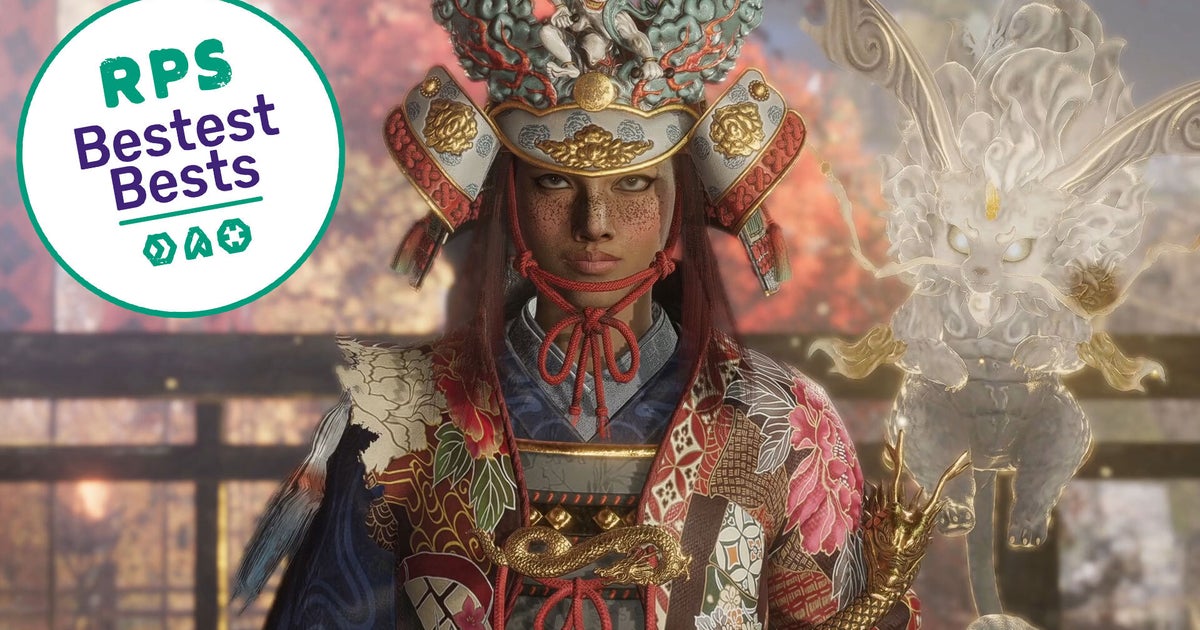
My experience with the third Nioh reminded me of many other games — the open world of Elden Ring, the samurai/ninja gameplay of Assassin’s Creed Shadows, and the dopamine-generating loot drops of Diablo.
I make these comparisons not to disparage Nioh 3, but rather to praise its adroitness. This is a great game that pilfers elements from many disparate titles with the stealthy fluidity of a shinobi, blending them into an attractive whole that resembles a shiny samurai cuirass.
I should now admit that I find samurai, who were basically the cops of their day, overrated. I particularly roll my eyes at the “honourable warrior” myth that romanticises the Warring States, AKA Sengoku era, a period of civil war in Japan. That said, Nioh 3, which is full of Sengoku stereotypes, is good enough to overlook the cliches.
The plot of Nioh 3 may be incomprehensible if you’re unfamiliar with Japanese history — I have a degree in East Asian Studies, and I found it a blur at times. You play as Tokugawa Takechiyo, the grandchild of famed shogun Tokugawa Ieyasu. You’re supposed to be next in line for the throne until your emo brother, Tokugawa Kunimatsu, seizes control and summons a giant red eyed-yokai (which bears an odd resemblance to the boss Bongo Bongo from Zelda: Ocarina of Time) to engulf Edo Castle.
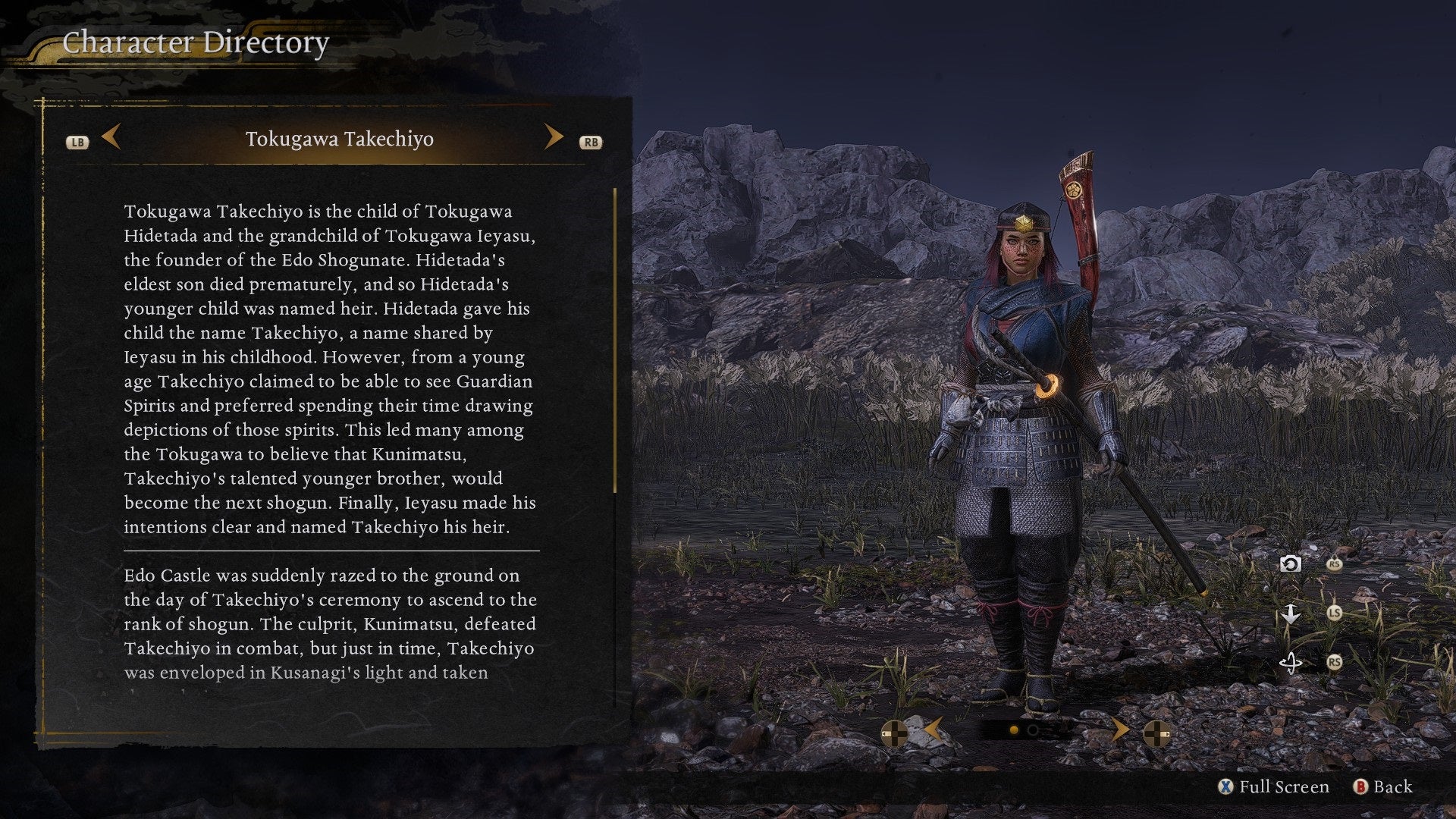
The next thing you know, you’re jumping around in time from 1622 to 1572 trying to save the day, and your quest leads to multiple eras. Expect to run into dozens of mythologised Japanese personas who come and go in the blink of an eye. How many versions of Tokugawa ninja Hattori Hanzo has this series featured, anyway?
I haven’t played the previous Nioh games (though now I want to), but Ed, RPS in peace, mentioned a similarly sloppy story in his review of Nioh 2. The Tale of the Heike, this franchise is not. Gameplay has always been the priority for Koei Tecmo, and happily, they’ve done a fine job here, starting with the Ninja playstyle, which complements the Samurai stances that defined Nioh 1 & 2. While Assassin’s Creed Shadows split things up by featuring one Samurai character and one Ninja character, here your version of Tokugawa Takechiyo learns both styles and switches between the two with a single button press, which you’re encouraged to do so as a means to parry major enemy attacks.
Playing as a Ninja is a fast experience where you can pepper a boss with ranged projectiles, including kunai, shuriken, and all manner of Ninjutsu magics, breaking to dash in for some hit-and-run backstabs with talons or tonfa. In contrast, the Samurai leans closer to typical soulslike patterns of attacking and parrying with the occasional dodge. You’ll wield slower, heavier, and more reliable strikes, all while rhymthically tapping buttons at the right intervals to keep from running out of Ki.
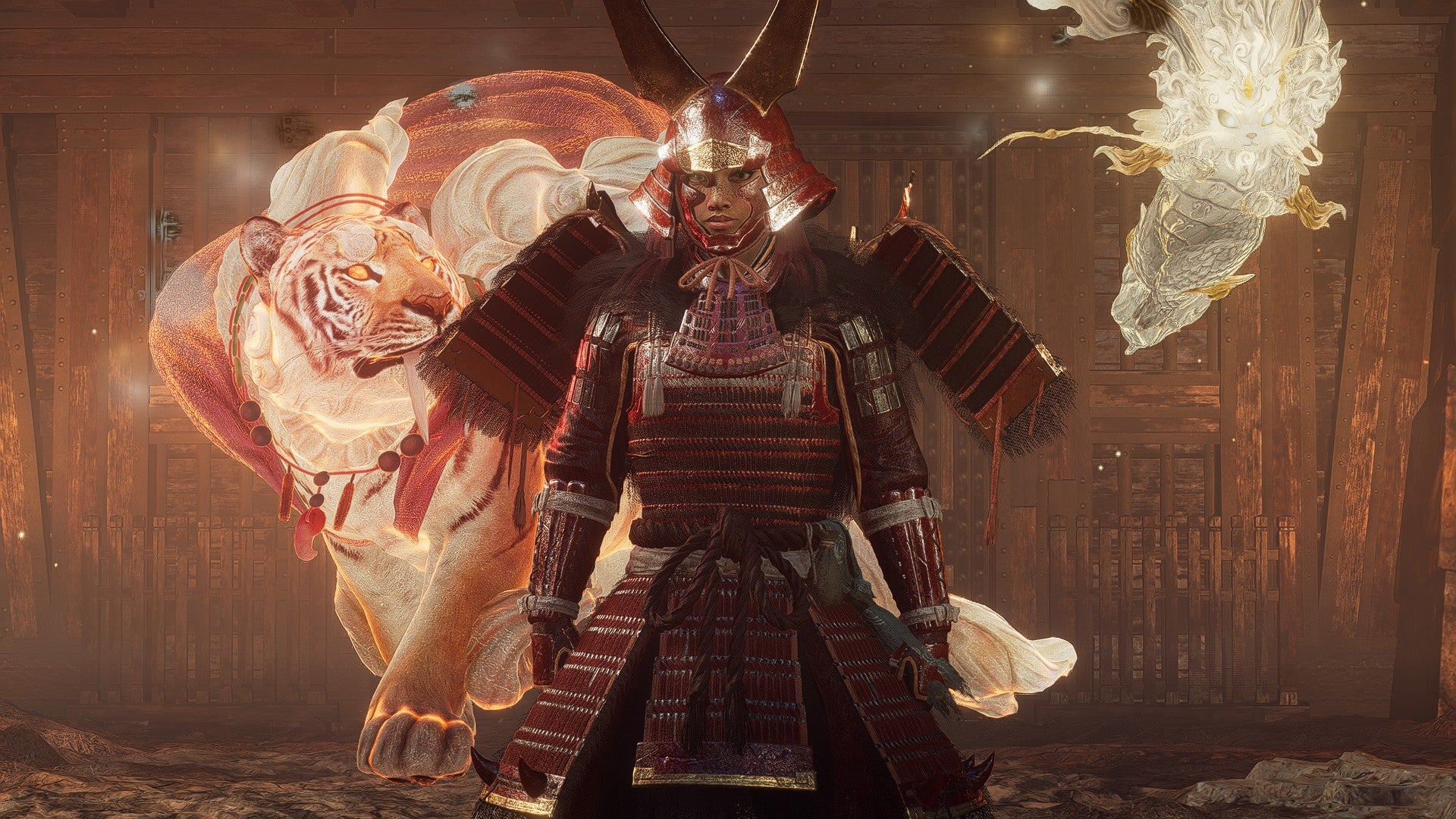

Whichever style you choose, the combat feels refined, though there is much more to keep track of than other soulslikes. There’s all that tapping to maintain your Ki, and you also need to be wary of so-called “Yokai Realm” pools of corruption that occasionally appear from enemies and suck up said Ki, and then you can invest in skill trees to get additional attacks that require combos a la a fighting game, and let’s not forget the dozens of weapons on display, each of which must be learnt with care. Nioh veterans will know all of this already, but you can tell that the folks who made Dead or Alive and Ninja Gaiden are behind this series.
Perhaps the Ninja playstyle, which allows beginners to toss tonnes of bombs with relative ease, was included for newbies. I certainly found Ninja easier at first, though I soon began to switch to Samurai whenever I needed to tank a boss or deal maximum damage.
Nioh 3 does a fine job, in other words, at encouraging players to utilise both styles as they become more adept. If you practice, you can pull off some truly ridiulous attack patterns by switching between Samurai/Ninja in rapid succession, and I doubt that even the hardened Nioh 1 & 2 Redditors grumbling about the inclusion of Ninja are going to stay grumpy when they discover this potential. Though they might justifably bristle at the fact that gear and weapons are now divided into Samurai and Ninja types, and one cannot use the other, which means that you’ve got to be a Ninja if you want to use old favourites like the Splitstaff.
Nioh 3 also differs from its mission-based, linear predecessors in its now open world. As someone who finds the size of Elden Ring intimidating, I became worried once I cleared the tutorial segment, crested a hill, and the logo appeared over a vast valley that dared me to lose myself in its seemingly excessive intricacies. I was even more nervous when I opened my menu and was once again reminded of Assassin’s Creed, this time by a map that seemed destined to be plastered with a nonstop array of markers.
I’m relieved to report my first impressions were false. Not as big as Elden Ring’s (but still pretty big), Nioh 3’s open world uses gentle features to keep from overwhelming you. Each sector of the map comes with a Recommended Level, a decision that seems pulled from ARPGs and MMOs. (Don’t worry — you can ignore these recommendations if you’re skilled (or brave) enough to attempt a tougher area.) You also aren’t hit with hundreds of map markers and checklists from the getgo. Rather, as you move through an area and raise its Exploration Level, there’s a gradual rollout of icons on your map.
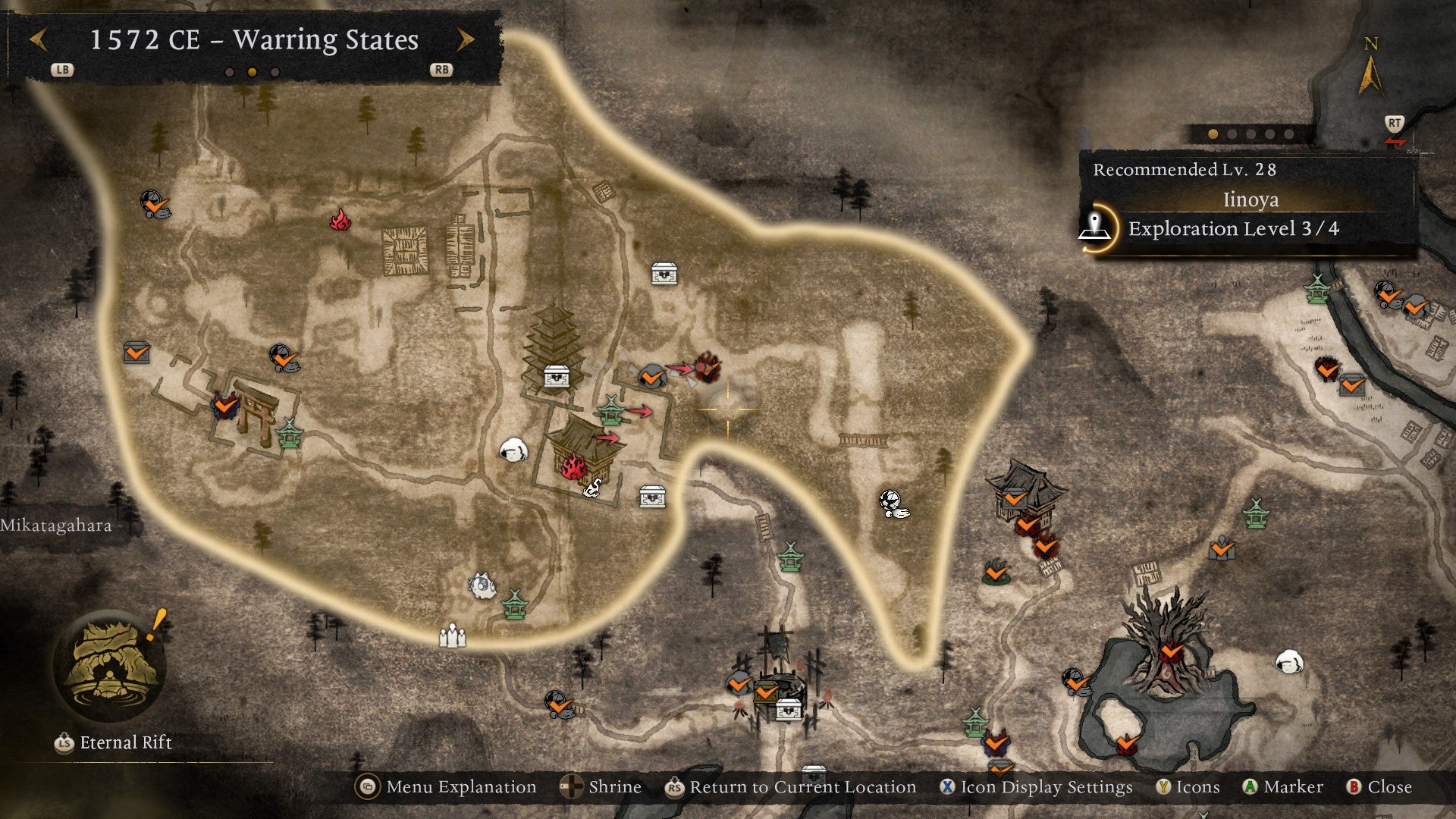
There’s much to do in Nioh 3’s open world, which is busy but not as busy as most. Enjoy huge vistas, hang with roly poly cats, rub the bellies of otters, good stuff.
Even when a region’s Exploration Level is full, Nioh 3 still avoids most of the fat common in open worlds. Sidequests, called Myths, are spaced out, the Enemy Bases that you can clear (which once again feel extremely similar to Assassin’s Creed Shadows, which had the exact same mechanic) aren’t too grueling, and the bog-standard “collect X number of doodad” tasks are entertaining, because they revolve around chasing chonky cats called Scampusses and shooting fantastical flying otters known as Chijiko out of the sky. (If you’re reacting in horror, know that their bestiary entry mentions they like acting as target practice for humans. They’ll also always give you a cuddle after you zap ’em to the ground.)
Interspersed through the open world are fragments of the structure of the previous Niohs. Certain quests are instanced missions that can be replayed in co-op, which I didn’t get to test for this review, but I imagine may please anyone who played through Elden Ring with a buddy. Chief among these are deep dives into a hell-like landscape called the Crucible, created by that big Bongo Bongo-esque yokai in the sky. The Crucible missions offer something similar to the traditional soulslike levels that I typically prefer, though their confusing fire red landscape had me running in circles more often than not and dying in lava pits.
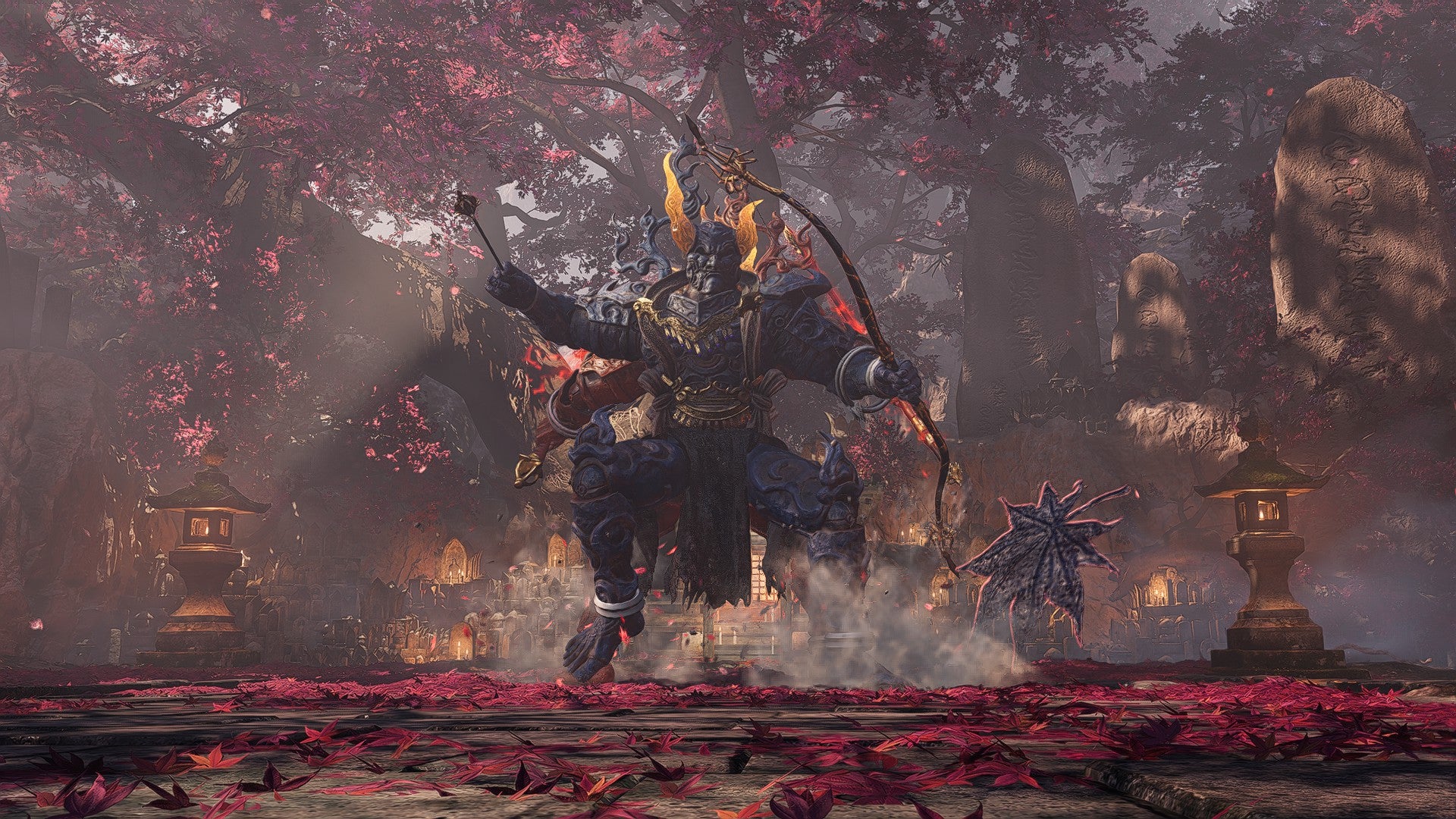
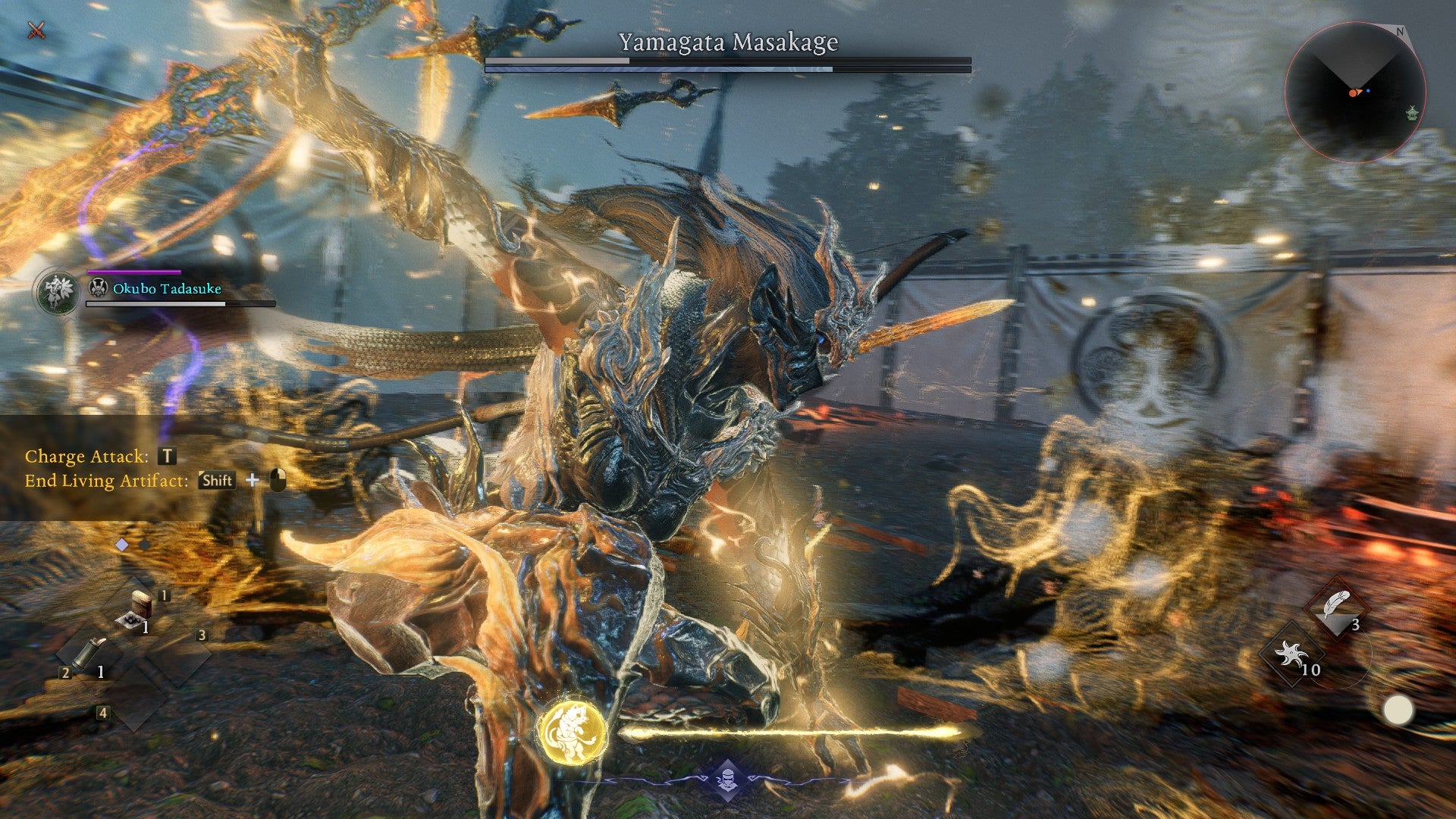
Bosses can be absolutely vicious, but if you can’t tackle ’em in co-op, you can at least summon the soul of a dead NPC or fellow player to assist you. (They’re called Acolytes here.) When you emerge victorious, expect to get a bucketload of loot for your trouble.
Speaking of death, on the difficulty scale, Nioh 3 is less punishing than its contemporaries except when it comes to certain bosses, one of which frustrated me so much that I slammed my controller into the piece of MDF that masquerades as my desk and left a hole in it, something I haven’t done since the NES days. But tales of the Bloodedge Demon plaguing demo players aside, none of these bosses are insurmountable, largely thanks to the freedom that switching between Ninja and Samurai offers.
There’s also a heckuva lot of gear, skills, and customisation to help you deal with the opponents in your path. Nioh’s loot and leveling system has always taken influence from ARPGs, and you will see slot machine-style drops of weapons and equipment colour-coded for rarity, with purple representing that sweet legendary gear. Diablo and Path of Exile fans will be right at home, and all everyone else needs to know is that even though there’s a blacksmith designed to help you improve loot, you really don’t need to fuss around with it in your first playthrough. Pick a few weapons to specialise in, equip the highest level gear you get, choose skills you like, rinse and repeat. You can transmog your look and run around in a not-leaving-much-to-the-imagination fundoshi if you so prefer, and respeccing stats is 100% free. I haven’t even touched on the Onmyo magic system, which returns from Nioh 2 and lets you collect the souls of yokai like Pocket Monsters to supplement your attacks.
Clearly, there’s enough stuff under the hood to entertain for a very long time. (The first era of the game took me 45 hours to clear.) The only quirks you might face are optimisation issues, which sadly cropped up for me more than once. I know that my RTX 3060 is getting on in years, but Nioh 3 chugged like molasses at times, even when I tweaked FPS and turned down a bunch of graphical flairs. Team Ninja has never succeeded at optimising their games for PC, even when they brought a bunch of decade-old Ninja Gaiden titles to Steam long ago, so there’s no surprise here.
Wonky performance aside, Nioh 3 is excellent. It’s not as elegant and practiced as FromSoftware’s efforts, and I daresay that the creativity present in recent Chinese soulslikes like Black Myth: Wukong isn’t matched here either. But it still warrants a Bestest Best, because what this game does do is deftly borrow from modern titles in a variety of genres, mingling their flavours into one delicate Miso soup. There’s a word in Okinawan – chanpurū – which means to mix together. That’s what Nioh 3 is – a chanpurū of influences that manages to entertain in a wonderful fashion. Even if you’re biased against samurai like I am, it’s still worth your while to fire this one up, tackle the Crucible, and cuddle a Chijiko or three.
This review is based on a review build of the game provided by the developer.
Multiplayer Competitive,Wot I Think,RPG,Team Ninja,Action Adventure,Nioh 3,Multiplayer Cooperative,PC,Single Player,Bestest Bests,PS5,Third person#Nioh #review #superb #blend #soulslike #splendour1770223903
